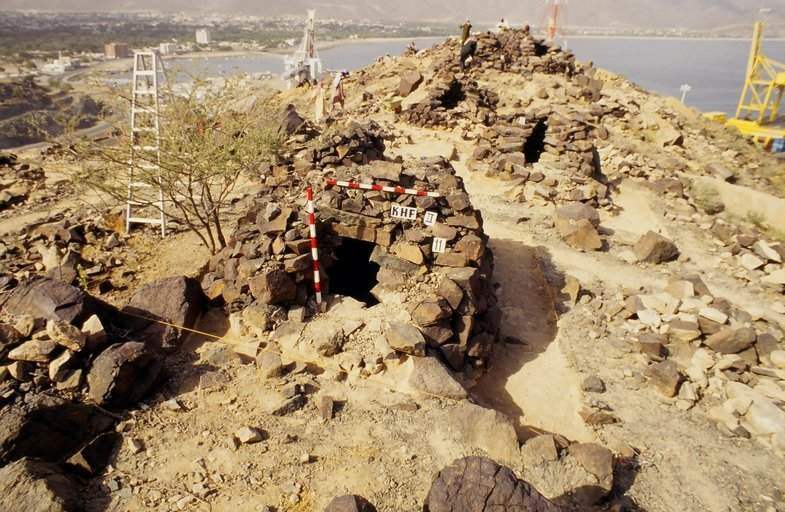
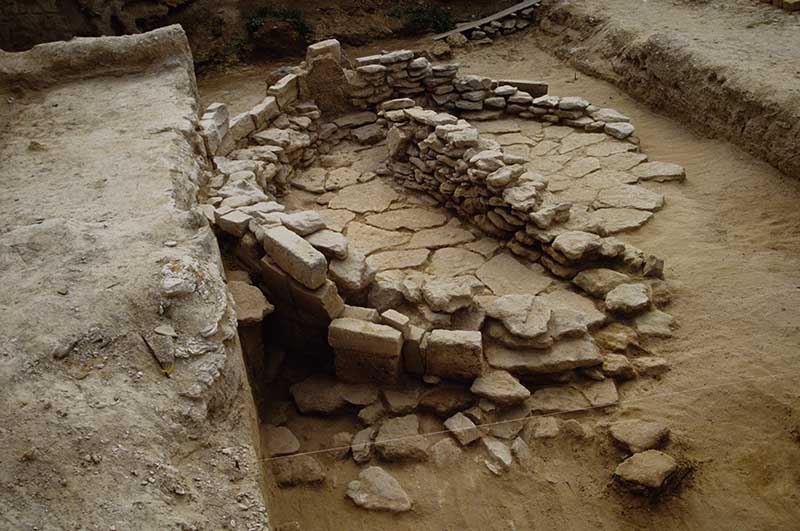
Tell Abraq is located on the border between the Emirate of Sharjah and the Emirate of Umm Al Quwain, near the main road leading to the Emirate of Ras Al Khaimah. The mound rises approximately 10 metres above the level of the surrounding plain. The site primarily consists of houses made from palm fronds (barasti or arish), surrounding a massive mud-brick fort with a stone façade measuring 40 metres in diameter. Evidence of the palm-frond houses can still be seen in the numerous postholes found throughout the excavated areas. The fort rises approximately 8 metres above the original ground level to the tops of its inner mud-brick walls. The site contains a well, providing both shelter and a water source during times of hardship. The fort remained in use from approximately 2200 to 1500 BCE, when a mud-brick platform was constructed over the earlier structure, protecting it from erosion and destruction. About 10 metres west of the fort lies a circular stone-built tomb dating to the Umm Al Nar period, measuring 6 metres in diameter and divided internally by a single wall. It appears to have served as a communal burial place for the inhabitants of Tell Abraq during its early settlement period. The tomb contains the remains of more than 150 individuals, including children and men over the age of 60, despite an average human life expectancy of no more than 40 years at the time. Bone analysis revealed that the inhabitants had strong musculature and exceptionally large bones. Studies also indicated that they suffered from several illnesses. Examination of the skeleton of an 18-year-old girl revealed evidence of polio, while several cases of arthritis were also identified. Although other graves from later periods are believed to exist, they have not yet been discovered. A large number of artefacts recovered from Tell Abraq provide evidence of extensive contact with the outside world. Pottery originating from Mesopotamia, southwestern Iran, Baluchistan, Bahrain, Afghanistan (Bactria), and the Indus Valley has been identified, alongside other archaeological finds, including silver cylinder seals from Iran and tin from Afghanistan. These artefacts demonstrate that the site maintained connections with wider regions of western and central Asia during the late third and second millennia BCE, throughout the Bronze Age. Tell Abraq has yielded an exceptionally large collection of animal remains, considered the largest recovered from any site in the Arabian Peninsula. These remains indicate that the inhabitants practised animal husbandry, raising domesticated animals such as sheep, goats, and cattle, while also hunting local wild animals, including gazelles and Arabian oryx. Among the bone discoveries was a complete skeleton of a 4,000-year-old donkey, along with numerous camel bones. Large quantities of fish, shellfish, and turtles from the Arabian Gulf were also consumed. Agriculture included the cultivation of wheat, barley, and date palms. The inhabitants ground grain using large grinding stones discovered at the site. They also manufactured copper tools using copper extracted from mountains located approximately 50 kilometres away. Overall, Tell Abraq offers a valuable glimpse into life during the Bronze Age. The sheer size of its fort and the extensive evidence of external contacts demonstrate the site's considerable importance during this period.
Related Sites

Mleiha Tomb (Umm Al Nar Period)
Mleiha Tomb (Umm Al Nar Period)
Jebel Buhais Site