
The modern city of Khor Fakkan, which belongs to the Emirate of Sharjah, is located approximately 100 km east of Sharjah city. It occupies a strategic position directly on the eastern coast overlooking the Gulf of Oman. Khor Fakkan Port is one of the city’s most prominent landmarks, serving as a hub for international trade and an active economic centre.
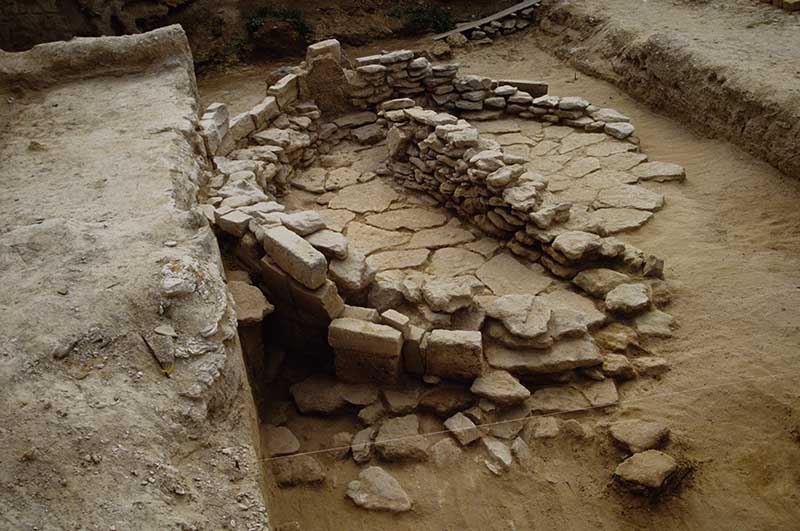
Over the past decade, the city has witnessed several archaeological excavation campaigns that have uncovered significant archaeological discoveries, reflecting its importance throughout the ancient history of the region. Archaeological excavations conducted in 1995 revealed a large settlement dating back to the second millennium BC. The settlement occupied the foothills of nearby mountains close to the sea. It appears that the inhabitants prepared terraced platforms along the mountain slopes to facilitate the construction of their houses. These houses were built according to a planned layout and consisted of rectangular rooms constructed from locally available stones.
The use of tree branches placed over wooden supports, such as poles or tree trunks, appears to have been the most likely method of roofing these rooms. This is indicated by the presence of numerous circular holes in different parts of the houses. A variety of archaeological materials were discovered inside the houses, including pottery vessels, soapstone vessels of different shapes and sizes, stone tools used for grinding, metal tools, and fishing equipment. The presence of these objects indicates that the nearby sea was an important economic resource that helped sustain the settlement’s inhabitants.
The Khor Fakkan settlement appears to have continued playing an important role in human activity for an extended period, including the subsequent Iron Age and Hellenistic periods, as well as the Islamic period. Recent archaeological excavations in different parts of Khor Fakkan have revealed significant discoveries dating back to the Islamic period.
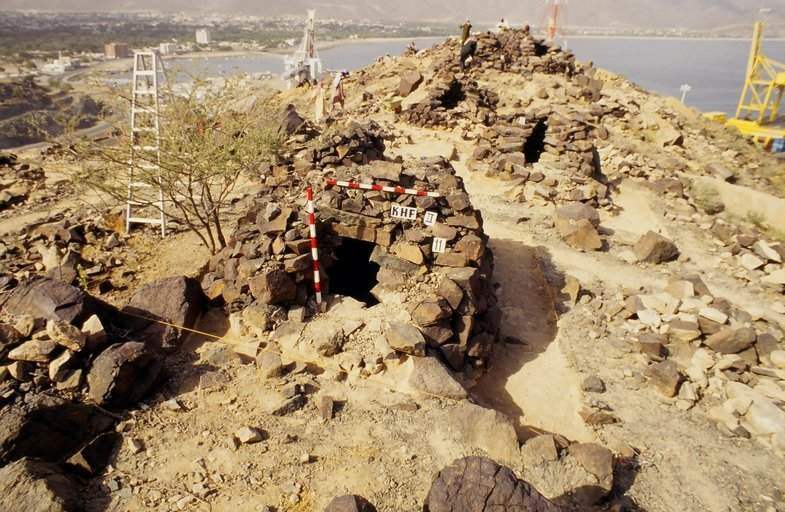
Particular attention should be given to discoveries made on the summit of a mountain, where the remains of a fort, residential houses, an adjacent mosque, and a water reservoir were found. Other important discoveries were made near the entrance to Khor Fakkan’s seaport. These included several residential houses, manufacturing workshops, and other buildings containing a variety of archaeological materials. Of particular significance are imported pottery vessels from China, Thailand, Burma, and Iran, dating to the 14th–16th centuries AD. Yellow-glazed pottery imported from Yemen and dating to the 13th century AD was also discovered. Other archaeological finds included glass vessels, bracelets, and objects made from various metals.
The diverse collections of artefacts uncovered through archaeological excavations in Khor Fakkan demonstrate the city’s importance as a distinctive economic settlement during prehistoric times and as a prominent trading centre that played a major role in international trade networks during the Middle Islamic period.
Related Sites

Mleiha Tomb (Umm Al Nar Period)
Mleiha Tomb (Umm Al Nar Period)
Jebel Buhais Site