
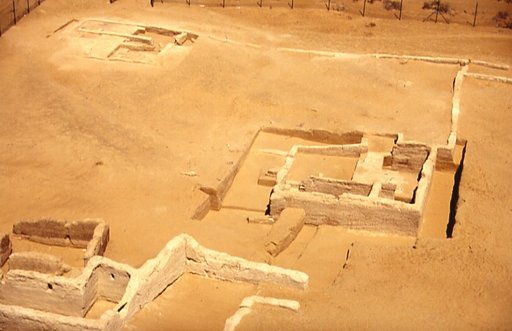
The Saruq Al Hadid Archaeological Site is one of the unique and significant archaeological discoveries made in the United Arab Emirates in recent decades. It is considered one of the region’s major centres for copper smelting and the manufacture of various tools and vessels from the beginning of the Iron Age II (1270–800 BCE).
The site was discovered in the spring of 2002 by His Highness Sheikh Mohammed bin Rashid Al Maktoum, Vice President of the UAE, Prime Minister, and Ruler of Dubai, during one of his inspection tours of the area. Recognising its historical significance and archaeological value to the Emirate of Dubai, he ordered archaeological excavations to uncover its heritage.
The site covers an extensive archaeological area of approximately two square kilometres, containing features dating from the third millennium BCE to the end of the Iron Age. A prominent sandy mound rises between 5 and 7 metres above the original ground level. Its surface is covered with large quantities of metal slag, copper ore fragments, iron fragments, pottery sherds, remnants of smelting crucibles, and stone pounders.
Ongoing excavations have uncovered more than 10,000 diverse artefacts, including rare objects unparalleled in the archaeological collections of the UAE. These finds include large quantities of gold jewellery, bronze and copper tools and vessels, and bronze weapons such as daggers, long swords, knives, and spearheads. Iron weapons have also been discovered, including long swords, arrowheads, spearheads, and daggers. Other finds include stone seals, pottery vessels of various sizes and shapes, soapstone vessels, and beads of different types, shapes, and colours.
The site also appears to have been one of several locations in southeastern Arabia associated with snake worship. It was connected to a network of inland settlements and trading centres. Its geographical location in the desert provides further evidence of the economic and religious importance of the desert region during the Iron Age.
Related Sites
Al Thuqeibah Site
Muweilah Site
Masafi 1 Site