

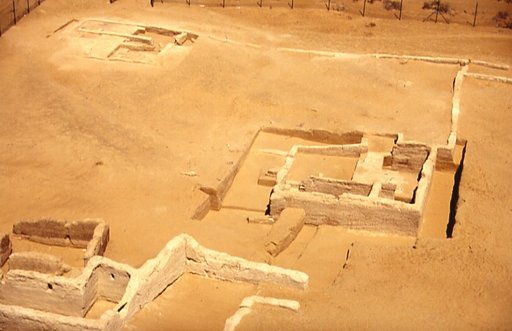
Al Thuqeibah is an Iron Age settlement located approximately 20 km south of Al Dhaid, at the southernmost edge of the Al Madam Oasis. The geomorphology of the area indicates that groundwater supplied the oasis, its settlements, and the wells found there. The surrounding mountains, including Jebel Buhais, Aqaba, and Al Imilih, provided shelter and protection from the desert sands. Despite the region’s hot climate and scarce rainfall, the springs of Jebel Buhais and water from the plain, channelled through wells and aflaj irrigation systems, helped sustain and promote human settlement in the area. In 1987, the Sharjah Archaeology Department excavated an exceptionally well-preserved residential building constructed from mud bricks near Al Thuqeibah village. The building dates to the Iron Age (1300–300 BCE). Further archaeological excavations were carried out in 1994 by a joint French–Spanish archaeological mission, followed by a Spanish mission from the Autonomous University of Madrid in collaboration with Sharjah’s local archaeological excavation team. These excavations revealed an extensive settlement dating to the Iron Age II period (1000–600 BCE), providing important insights into the ancient history of the United Arab Emirates. During the Iron Age, Al Thuqeibah, together with other contemporary settlements on the Al Madam Plain, such as Umm Safah, occupied the westernmost edge of the oasis. Its inhabitants were able to benefit from the resources available in both the steppe and oasis environments. Collaborative work by archaeological specialists has helped establish a clearer picture of the region’s history and civilisation during this period. It has also revealed previously undocumented aspects of its substantial historical and cultural heritage, including an unusual settlement layout, sophisticated water-management practices, the earliest known mud-brick production workshop, and a series of water installations of varying levels of complexity.
Related Sites
Muweilah Site
Masafi 1 Site
Masafi 3 Archaeological Site