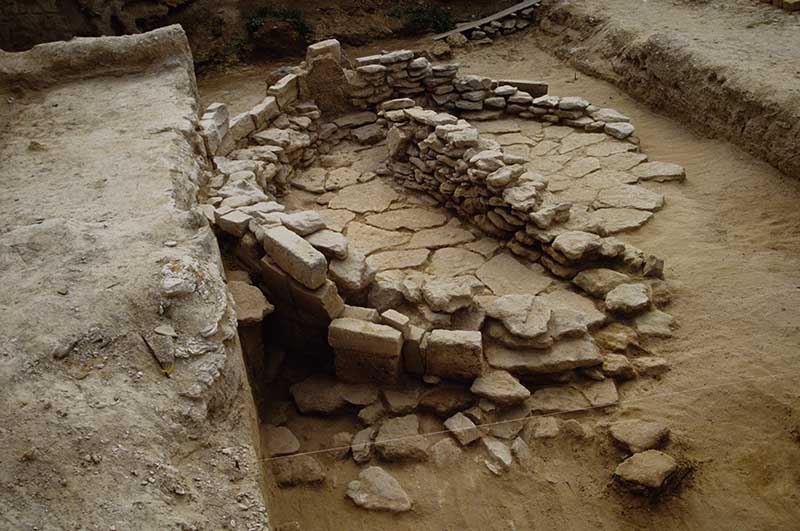

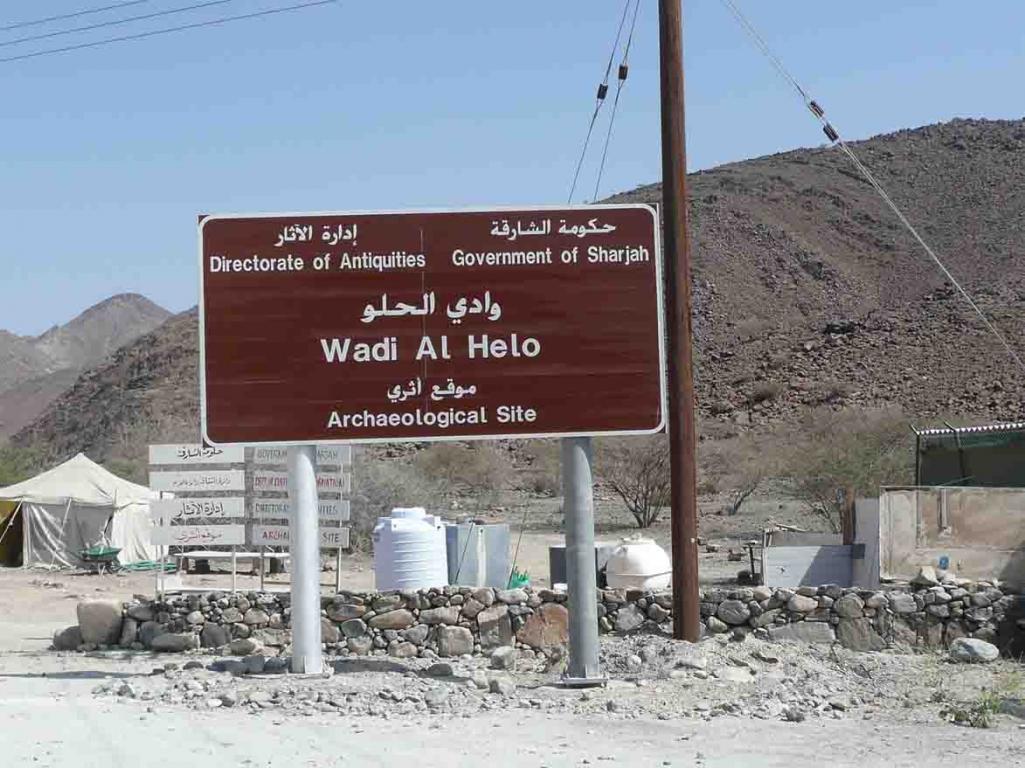
The Wadi Al Helo Site (HL 01) in the Emirate of Sharjah has been subject to archaeological excavations since 1997, conducted by a joint mission comprising the Sharjah Archaeology Department and the Institute of Prehistory at the University of Tübingen in Germany. The site is located in the upper reaches of Wadi Al Helo, which takes its name from the area’s fertile land and the abundance of fresh groundwater.
Small quantities of copper ore were discovered in the northern archaeological area, some bearing traces of ancient mining and evidence of copper smelting at the site. These activities date back to the transition from the Stone Age to the Bronze Age, representing the earliest known evidence of a mining industry in what is now southeastern Arabia.
Continuous settlement at the site during the Bronze and Iron Ages is clearly demonstrated by pottery characteristic of both periods. Direct and indirect evidence of metal production has been found, including smelting furnaces, workshops, and various remains associated with copper ore extraction. A copper ingot weighing 4.6 kg was also discovered. Lead isotope analysis indicates that it was produced from local copper ore, providing direct evidence that metalworking was practised at the site. Isotope analysis of some copper artefacts from other Bronze Age sites suggests that Wadi Al Helo was a potential source of copper ore for southeastern Arabia.
The site’s economic significance and its products are further reflected in the remains of defensive structures. The most prominent is the base of a watchtower dating to the Umm Al Nar period, excavated near the southern entrance to the site. Defensive walls have also been identified along the northern boundary. Numerous remains of individual buildings in the northern part of the site indicate human occupation during historical periods and remain in relatively good condition.
The presence of an Islamic-period watchtower near the southern entrance, together with the ruins of a large house on the opposite side of the valley, demonstrates that the area’s favourable environmental conditions attracted human settlement and copper-related activities throughout different historical periods.
Related Sites

Mleiha Tomb (Umm Al Nar Period)
Mleiha Tomb (Umm Al Nar Period)
Jebel Buhais Site