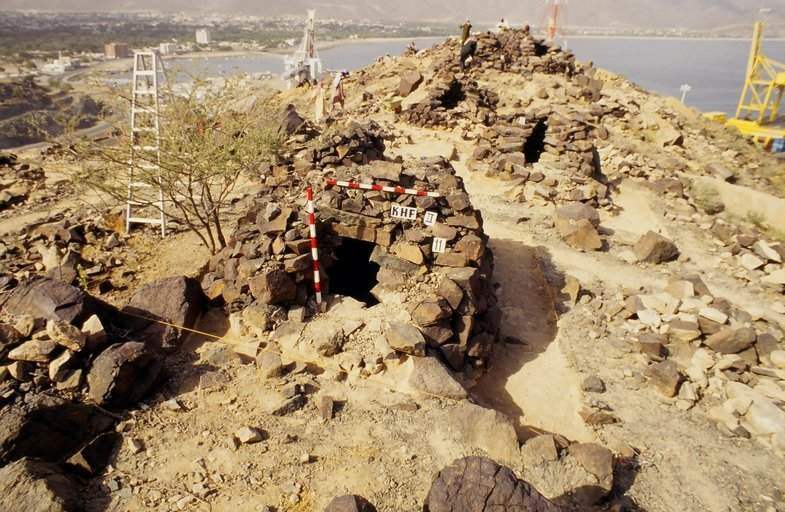


The modern city of Mleiha is located approximately 50 km east of Sharjah City. The ancient site of Mleiha comprises an extensive agricultural settlement containing numerous archaeological features dating to the post-Iron Age, Hellenistic period, and subsequent periods.
The archaeological record indicates that the earliest remains discovered at the Mleiha site date back to approximately 300 BC. However, the recent discovery of a tomb dating to the Umm Al Nar period has pushed the known history of the site back to the third millennium BC.
The tomb was discovered in 1998 by a local archaeological mission affiliated with the Sharjah Archaeology Department, within a date palm plantation. It was constructed according to the architectural style characteristic of the Umm Al Nar period. The tomb consists of a circular structure measuring 13.85 metres in diameter, making it the second-largest Umm Al Nar tomb after the tomb at Shimal, which measures 14 metres in diameter. It is built on a circular foundation of irregular stones, with an exterior façade made of finely dressed, regularly shaped limestone blocks. The entrance is located on the northern side and was identified by a rectangular stone bearing raised decorative motifs. The entrance leads to a passageway serving eight burial chambers, or compartments, with floors paved with flat stone slabs.
Numerous skeletal remains and a collection of archaeological finds were discovered inside the burial chambers. These artefacts exhibit the characteristic features of the Umm Al Nar period and include locally manufactured pottery, imported incised grey pottery, decorated stone vessels, bronze knives, and personal ornaments.
One notable feature of this tomb is the presence of a long stone piece that served as a drain to channel rainwater collected on the roof.
Related Sites
Mleiha Tomb (Umm Al Nar Period)
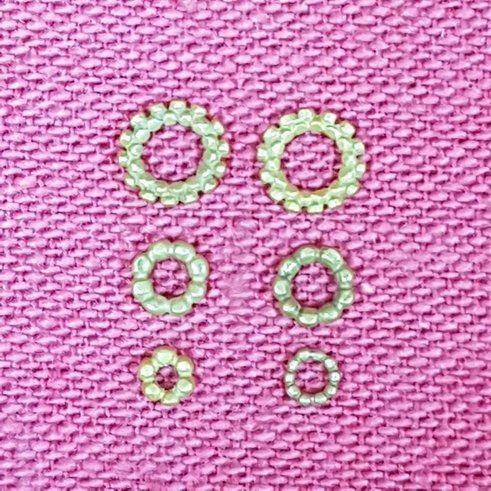
Jebel Buhais Site
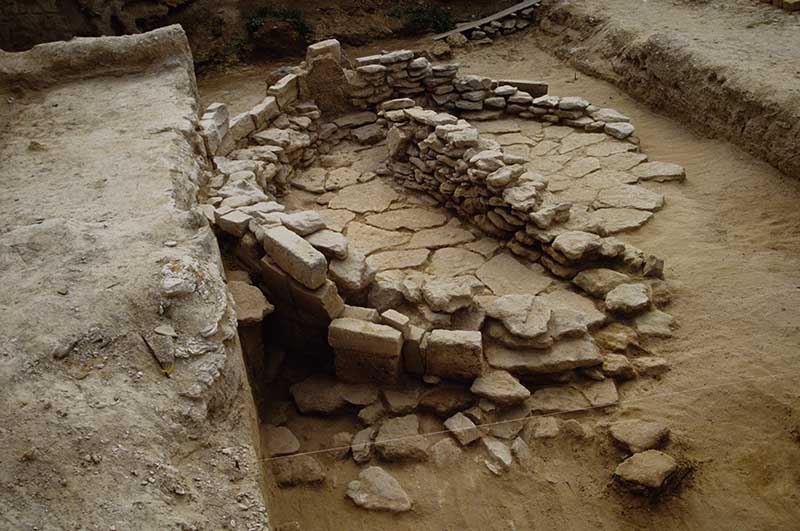
Tell Abraq Site