
The city of Kalba is located on the eastern coast of the Emirate of Sharjah, overlooking the Gulf of Oman. It is distinguished by several important environmental and archaeological features, the most notable of which is Kalba Creek. The creek contains the oldest mangrove forest in this part of the southeastern Arabian Peninsula and provides a natural habitat for numerous local plant and animal species. Today, it is an important tourist attraction as well as a valuable economic resource.
Archaeology is another significant feature of the Kalba region, where numerous archaeological sites have been documented, several of which have undergone excavations that have revealed highly significant discoveries. In the Al Sabkha area, shell middens containing stone tools dating back to the fourth millennium BC have been discovered. The region also contains various types of ancient tombs dating to different historical periods. Among the most important are underground tombs dating to the third and second millennia BC, which have yielded significant archaeological finds.
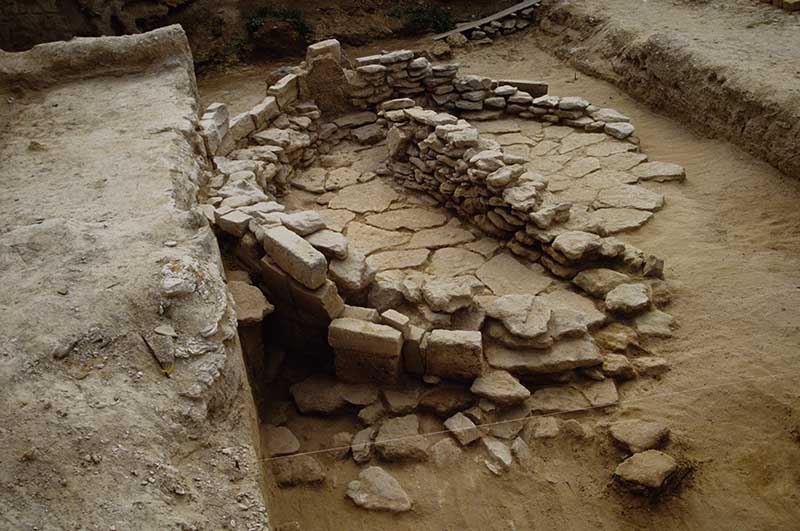
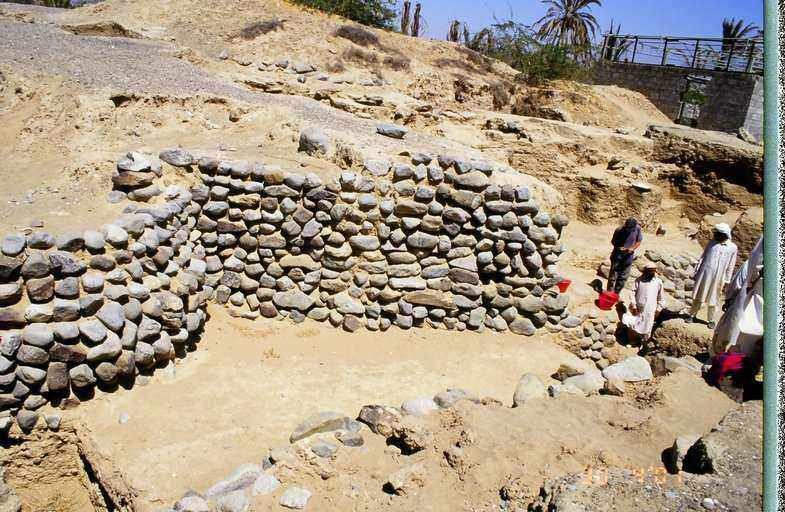
Of particular importance is a site occupying an extensive area within the Kalba orchards. It contains a large settlement with successive occupation layers spanning approximately 2,000 years, beginning around 2500 BC. The settlement appears to have been enclosed by a defensive wall around 1300 BC. Evidence of pottery, stone vessel, and metal production has also been found within the site.
The pottery indicates connections with ancient Iraq and the northern Arabian Gulf, as well as Iran and Pakistan. Considerable evidence also provides insight into the economic life of the ancient inhabitants. In addition to raising domesticated animals such as sheep, goats, cattle, and camels, the inhabitants exploited marine resources, including fish, turtles, dolphins, and dugongs.
Other significant archaeological remains in Kalba include the extensive cemetery excavated in the Al Tareef area. It contains a stone-built funerary platform and several tombs in which skeletal remains and grave goods were discovered. The cemetery also includes groups of tombs dating to the Hellenistic period.
Kalba is also notable for its numerous rock carvings, clearly visible on the rocky face of Jebel Khatm Malaha. These carvings depict a rich variety of animal and human figures, engraved using different techniques.
Among the region’s historically and culturally significant structures is a building featuring a stone tower atop a low hill in the village of Al Ghail, as well as the historic Kalba Fort, which dates to the early seventh century and has recently been restored.
Related Sites

Mleiha Tomb (Umm Al Nar Period)
Mleiha Tomb (Umm Al Nar Period)
Jebel Buhais Site