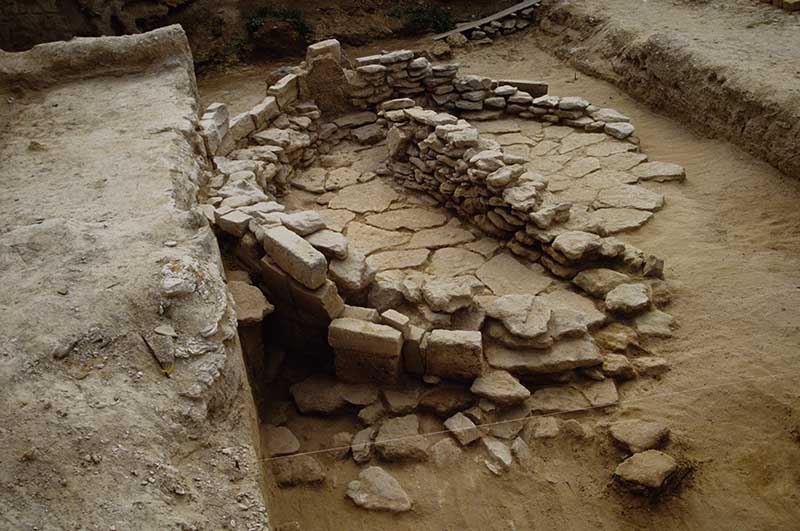


This site represents a communal tomb that was situated within a modern Islamic cemetery, which is still in use today. In the centre of the cemetery, large, clearly visible stones extend from north to south over a distance of 25 metres.
The excavation lasted 24 days and revealed that the tomb measures 30.7 metres in length, with an average width of approximately 2 metres or slightly less. Its depth ranges around 125 cm, with most of the structure extending below the level of the surrounding ground.
The tomb floor is paved with large, flat stones arranged in an orderly manner. These stones are readily available in areas near the tomb along the coast. More than 40 principal stones were used to pave the floor, excluding the large side stones that had collapsed into the tomb from its walls and roof.
Like most ancient tombs, the structure has suffered damage and looting over the centuries. Excavations also revealed another burial chamber beneath the floor paving, extending beneath the entire tomb. The paving stones had originally served as roofing stones for this lower chamber. The chamber measures no more than 20 cm in both width and depth and was cut into undisturbed, virgin soil. Its sides were constructed from small, roughly shaped stones. No human bone remains were found, and there was no evidence of looting or deliberate damage. Archaeological finds from the site were limited.
Although the purpose of the lower chamber remains uncertain, it was clearly too narrow to have been used for burial. It may have been associated with religious beliefs or funerary rituals relating to the burial of the dead. The tomb was also reused during the Hellenistic period.
Related Sites

Mleiha Tomb (Umm Al Nar Period)
Mleiha Tomb (Umm Al Nar Period)
Jebel Buhais Site