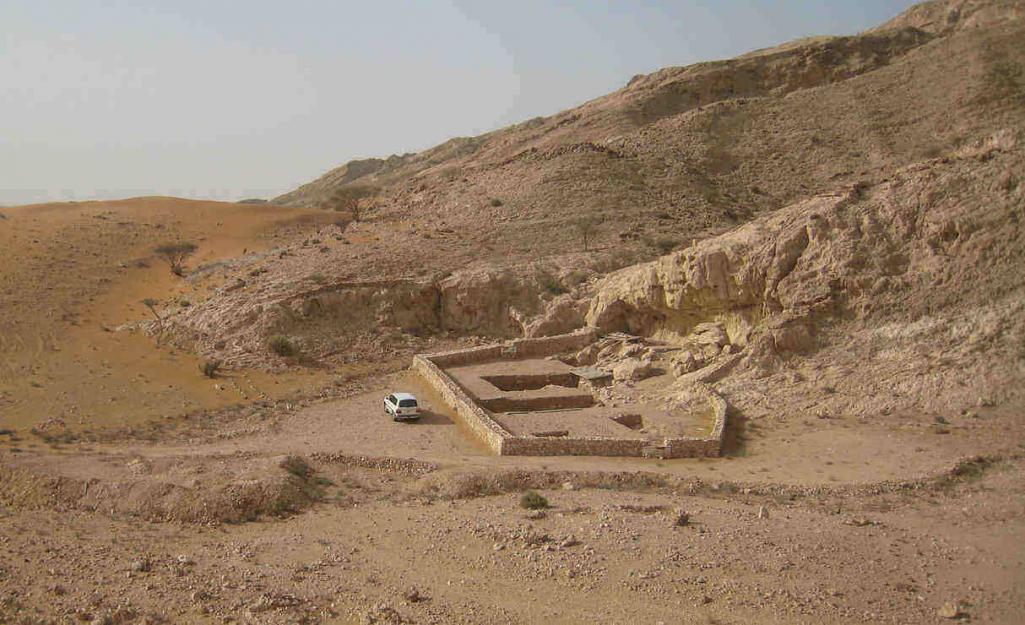

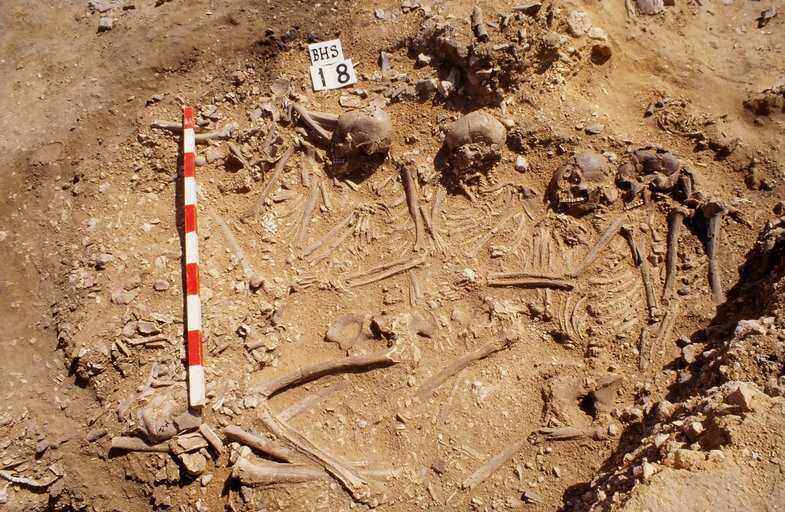
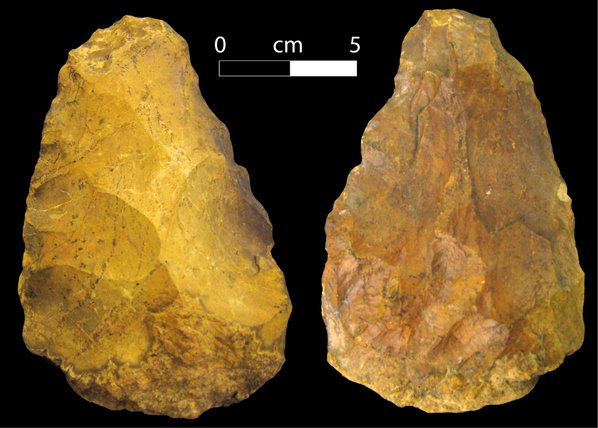
Located in the central part of the Emirate of Sharjah, between the Arabian Gulf and the Gulf of Oman, Al Buhais is an archaeological site dating back to the late Stone Age, also known as the Neolithic period. The site consists of a large cemetery and residential areas surrounding it. Radiocarbon analysis dates the site to 4780–4610 BCE, making it one of the oldest inland archaeological sites in the United Arab Emirates and an extremely important site for archaeological research on the Arabian Peninsula. The site comprises a large cemetery and adjacent community settlements. Recent discoveries indicate the presence of groups of nomadic pastoralists in eastern Arabia long before the emergence of the region’s first permanent settlements. These pastoralists roamed the semi-desert plains along the Hajar Mountains with herds of sheep, goats, and cattle, which provided them with milk and meat. At that time, dating to the beginning of the fifth millennium BCE, camels had not yet been domesticated. However, a small number of camel bone fragments were discovered during excavations, indicating that wild camels inhabited the region and were occasionally hunted, alongside gazelles, Arabian oryx, and wild donkeys. The inhabitants were unable to construct permanent shelters, or even sturdy tents or awnings. Numerous hearths were found at the site, formed in shallow pits lined with large pebbles. These hearths remain filled with thick layers of black ash and are the only surviving evidence of daily activities. These people first arrived at the foothills of Jebel Buhais more than 7,000 years ago. Their repeated visits were encouraged by the presence of an ancient spring, which dried up around 4000 BCE. Specialists from the Institute of Environmental Physics at the University of Heidelberg in Germany successfully identified and traced its remains. Somewhat later, possibly after 5000 BCE, the area began to be used for burials. The cemetery appears to have remained in use for an extended period. Approximately 1,000 individuals were buried in a small area measuring no more than 20 metres in diameter, at the foot of the ancient spring. Burial practices suggest respect for ancestors and the existence of beliefs in which the sun played an important role, as most of the deceased were buried with their heads facing east, towards the rising sun. Many graves contained collections of bones, indicating that the individuals had died elsewhere and their bodies had been left to decompose at another location. Their bones were then collected after some time and brought to the foothills of the mountain for final burial in the main cemetery. This practice is known as secondary burial. In contrast, individuals who died at or near the site received formal burials in shallow graves. They were laid on their sides with their legs and arms bent, and most were buried wearing their ornaments, including numerous necklaces made from thousands of beads crafted from coloured stones, shells, and pearls. Many graves contained more than one individual, and the arrangement of the bodies sometimes suggests family relationships. One grave contained the skeletal remains of two women and a man, all lying on their sides next to one another. The man was positioned between the two women, with his left arm resting across the waist of the woman lying in front of him. All three wore necklaces made of beads and shells. In another grave, five individuals were found lying side by side, with each person’s arm placed over another’s body at the time of burial. Laboratory analyses of samples taken from some of the skeletons indicated that the individuals were related. They were also buried wearing their full sets of ornaments. Notably, the woman lying at the front wore an agate bead in her nose, while the other woman wore a pearl in her lower lip. The reasons why several individuals may have died at the same time remain a matter of speculation. Overall, skeletal analysis suggests that the population enjoyed a good diet and generally good health. However, fractures were observed on some skulls. Many had healed, while others proved fatal. This suggests that life for pastoralists on the Al Madam Plain was not always peaceful. Tribal conflicts may help explain the simultaneous deaths of entire families. It should also be noted that some individuals buried in the cemetery may have undergone procedures involving the opening of the skull, possibly to remove a malignant tumour. In addition to human skeletons and animal bones, numerous stone tools and implements were discovered. Notably, no pottery fragments whatsoever were found at the site.
Related Sites
Suhaila Site
Khatm Milahah Site

Al Hamriyah Site