

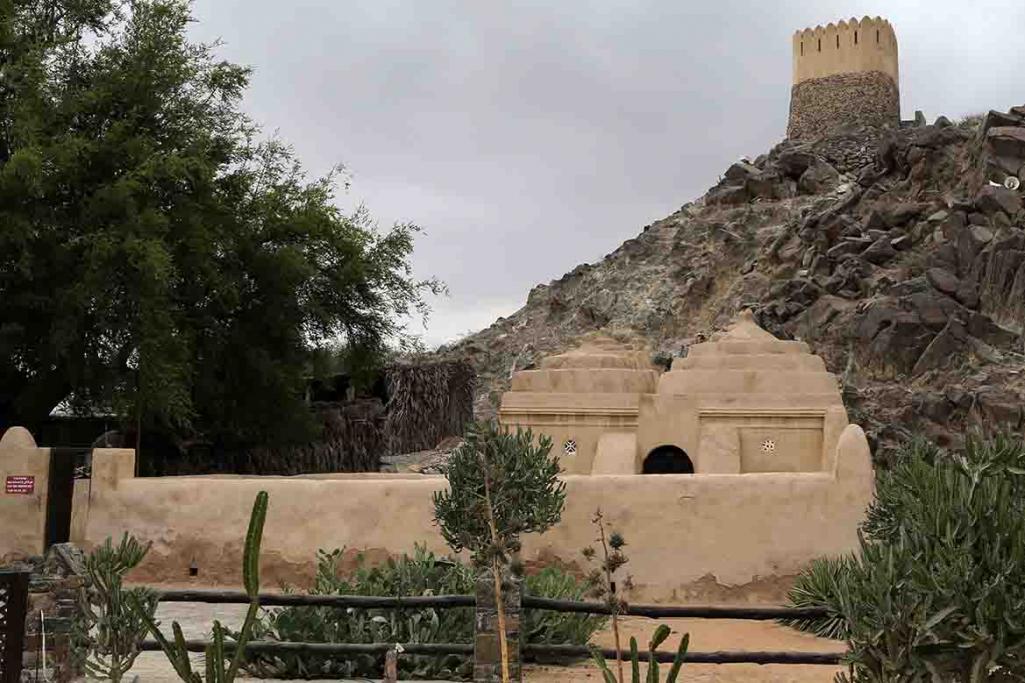
Located along the coastal road between the cities of Dibba and Khor Fakkan, which overlook the Arabian Sea, Al Bidya Mosque stands near a small rocky hill. It is renowned for its distinctive architectural design and is considered the oldest surviving mosque in the United Arab Emirates. Prayers are still held there.
Origin of the Name
The mosque takes its name from the Al Bidya area in which it is located, a large village in the Emirate of Fujairah. The mosque served the people of Al Bidya and the surrounding villages, including Al Fay, Al Jubail, Haqbal, Tawi bin Saada, Al Harah, and Al Tala’a.
The mosque is also known as the Ottoman Mosque, a name associated with its architectural style. Similar mosques with comparable architectural designs can be found in Yemen, in the Dhofar Governorate of Oman, and in Qatar, where the Old Grand Mosque is located in Doha.
Mosque Architecture
Al Bidya Mosque differs from other historic and modern mosques in its distinctive roof, which features four domes of unequal sizes, constructed in an elegant design. Each dome is composed of three superimposed sections: a large base, a smaller dome above it, and a third section ending in a pointed apex. The four domes are positioned close to one another and are supported by a single central pillar, the main structural column, along with smaller side pillars.
The foundations of the structure and the roof supports rest on the central pillar, forming an ingenious architectural system that supports all four domes.
The mosque is square-shaped, with each side measuring 15 yards, and has a single entrance. Its mihrab consists of a recess measuring two yards in length and one yard in width. The minbar comprises a staircase with three steps.
The mosque’s walls retain traces of inscriptions and decorative motifs that have been eroded over time. The most visible patterns resemble saw teeth. The walls also contain openings that allow natural light to enter, as well as niches for placing lamps.
The mosque stands within an open courtyard enclosed by a rectangular wall built from solid stones bonded with mud and straw. The wall does not exceed 1.5 metres in height.
Age of the Mosque
According to a recent study conducted by the Heritage and Antiquities Department in Fujairah in collaboration with the University of Sydney, Australia, during the 1997–1998 excavation season, organic material samples (charcoal) were collected from beneath the mosque’s wall foundations and analysed using carbon-14 dating.
The results indicated that Al Bidya Mosque was built in 1446 AD, approximately 552 years before the study was conducted.
Related Sites
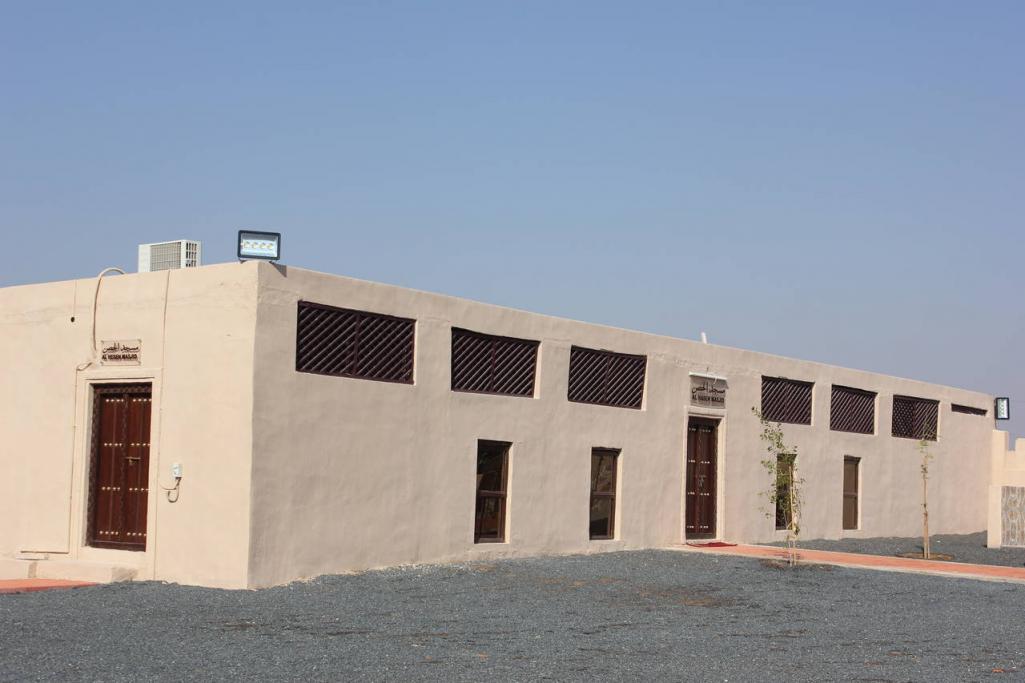
Falaj Al Mualla Mosque
Al Shariah
Bin Halees Tower